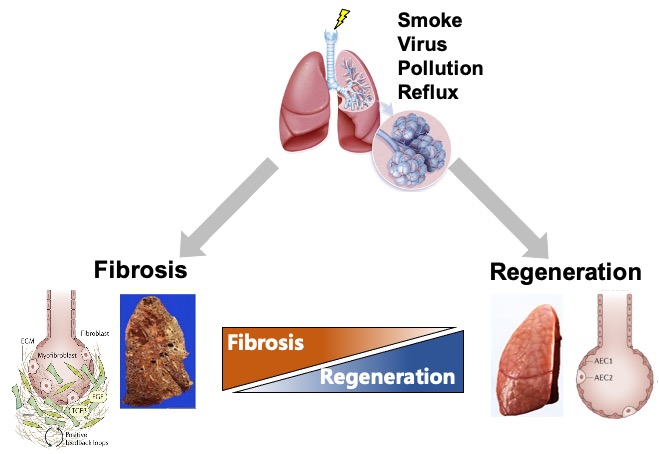


Tissue fibrosis(scarring) occurs as a complication of many major human diseases and is a leading cause of morbidity and mortality worldwide. The 5-year survival rates for patients with progressive fibrotic diseases, e.g. idiopahtic pulmonary fibrosis(IPF) are worse than many types of cancer. However, fibrosis is poorly understood, and accordingly, IPF remains an urgent unmet medical need despite two FDA-approved therapies, each of which show limited efficacy.
Fibrotic scarring is often defined as a wound-healing response that has gone awry. The adult lung is a largely quiescent tissue, but it can respond robustly to injury to regenerate lost or damaged cells, by activating stem/progenitor populations or promoting surviving, mature lineages to re-enter the cell cycle. When this regenerative potential is disrupted or limited, fibrosis may occur. Therefore, understanding the reparative capacity of the lung and the regulation of resident stem/progenitor cells in response to tissue injury is of remarkable therapeutic interest.
Our lab uses in vitro and in vivo systems, including organoid culture, cell-lineage tracing, and fibrosis animal models, combined with transcriptome analysis to the characterize the molecular mechanisms that regulate stem/progenitor cell proliferation and differentiation. Our ultimate goal is to identify genetic, molecular and cellular therapies for the treatment of fibrotic diseases.