


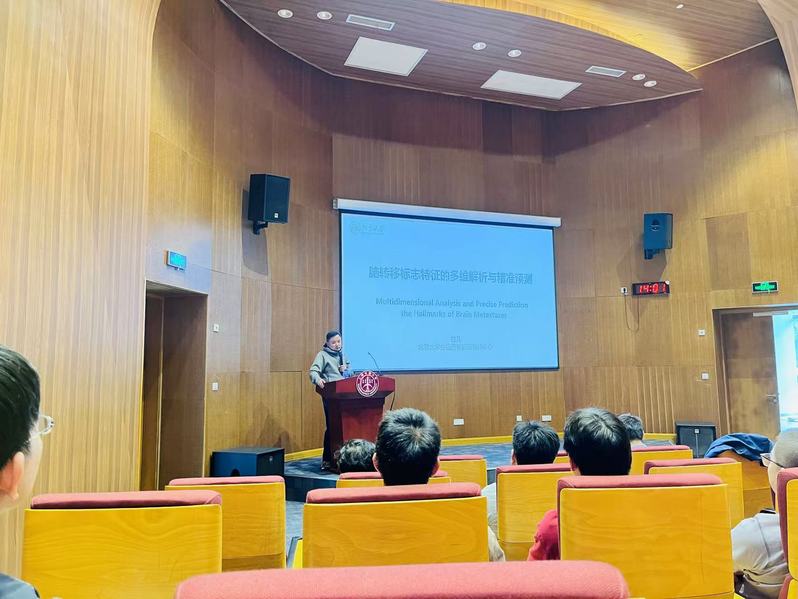
On October 31, 2025, at the invitation of Associate Professor Zhang Liye from the School of Life Science and Technology at ShanghaiTech University, Professor Fan Bai—a principal investigator at the Biomedical Pioneering Innovation Center (BIOPIC) of Peking University and the Peking-Tsinghua Center for Life Sciences—delivered an insightful lecture titled Multidimensional Analysis and Precise Prediction the Hallmarks of Brain Metastasesat the Lecture Hall of Building Y.
The Bai Lab focuses on innovating and applying single-cell and single-molecule technologies to explore interdisciplinary frontiers in biomedicine, with an emphasis on cancer initiation, gene mutation, metastasis mechanisms, and the molecular basis of bacterial pathogenesis and antibiotic resistance.
Brain metastasis is a critical event in advanced cancer progression and a major cause of patient mortality. It remains a significant clinical and therapeutic challenge for patients with metastatic cancer. To address this, Professor Bai’s team integrated single-cell RNA sequencing data from 108 brain metastasis (BrM) samples and 111 primary tumor (PT) samples, constructing the largest-ever pan-cancer brain metastasis atlas at single-cell resolution. This atlas enabled systematic investigation of the remodeling of cell states and composition across diverse cancer lineages and subtypes.
The study successfully decoded key features of brain metastasis, delineating the evolutionary trajectory of tumors from primary sites to metastatic brain lesions. The team identified cross-cancer conserved hallmarks of malignant cells in BrM, including enhanced chromosomal instability, activated proliferative and angiogenic signatures, and the adoption of a neural-like gene program. Additionally, they classified brain metastases into five distinct ecotypes (BrM-Ecotypes), each associated with specific pathological patterns and clinical characteristics.
This breakthrough not only provides a critical resource for understanding the mechanisms of brain metastasis but also pinpoints key progression events and reveals potential therapeutic targets, such as VEGFA, PNN, and PLCG2. By offering new insights into functional precision medicine, this work opens avenues for improving clinical outcomes for BrM patients and is poised to advance tailored therapeutic strategies against brain metastasis.
*This article was primarily generated by DeepSeek.