

On March 24, 2026, at the invitation of Professor Ying Xi from the School of Life Science and Technology, Dr. Xing Liu from the Shanghai Institute of Materia Medica (SIMM), Chinese Academy of Sciences, visited ShanghaiTech and delivered a lecture titled “Immune Defense against Pathogenic Infection & Therapeutic Intervention” at the L Building Lecture Hall.
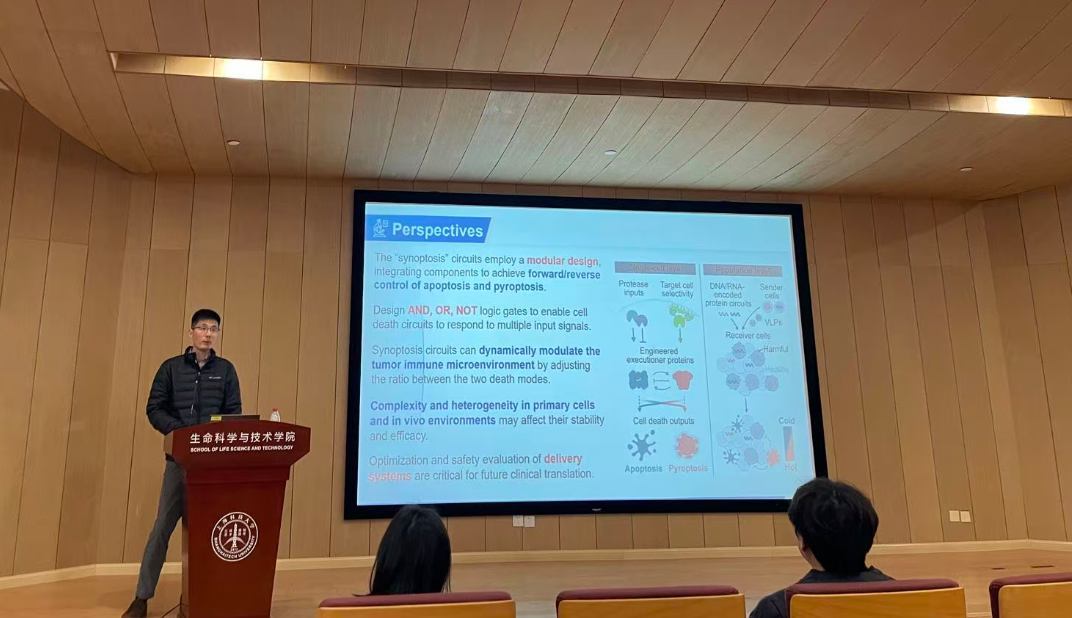
Dr. Liu’s research focuses on the mechanisms that regulate immune responses against pathogen infection. His work explores both microbial pathogenesis and the principles by which host cells defend against invading pathogens, with the goal of identifying new therapeutic targets and treatment strategies for diseases such as sepsis and autoimmune disorders.
During the lecture, Dr. Liu reviewed the discovery and recent advances in the study of pyroptosis, an inflammatory form of programmed cell death mediated by the gasdermin (GSDM) family. He explained that pyroptosis is characterized by cell swelling, plasma membrane rupture, and the release of inflammatory mediators such as IL-1β, IL-18, and HMGB1. While this process serves as an important defense mechanism against pathogens and abnormal cells, it can also contribute to inflammatory and autoimmune diseases. He noted that targeting GSDM pore-forming activity and the pyroptosis pathway may offer new opportunities for therapeutic intervention.
Dr. Liu then introduced his group’s recent work on how GSDM-mediated pyroptosis is initiated and regulated during infection. In Group A Streptococcus infection, the bacterial virulence protease SpeB directly cleaves GSDMA in host skin epithelial cells, releasing its pore-forming N-terminal fragment and triggering pyroptosis. In a Yersinia infection model, the host responds to Toll-like receptor stimulation and TAK1 inhibition through the lysosome-anchored Rag-Ragulator complex, which recruits and activates the FADD-RIPK1-Caspase-8 complex, leading to GSDMD cleavage and pyroptosis. This pathway is independent of the canonical inflammasome and depends on the GDP-bound state of Rag GTPases. Dr. Liu noted that these findings help reveal how pathogen sensing, metabolic regulatory platforms, and pore-forming effector proteins work together in host immune defense.
Dr. Liu also shared his team’s latest progress in developing therapeutics targeting the pyroptosis pathway. Through high-throughput compound screening, the group has identified lead compounds with potential for the treatment of sepsis, opening new directions for translational research.
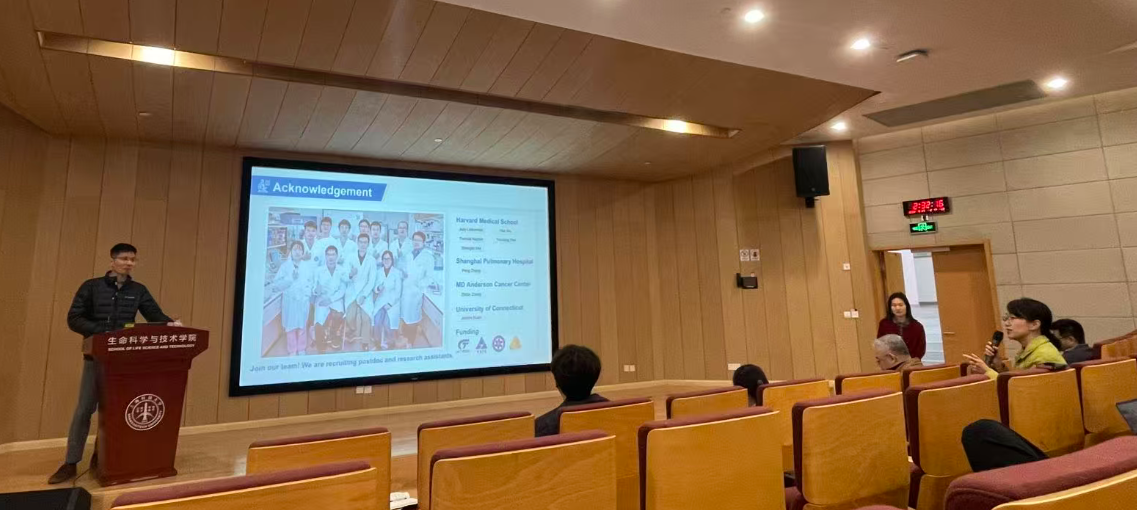
Following the lecture, Dr. Liu discussed with faculty members and students on the role of pyroptosis in anti-infective immunity and on strategies for therapeutic development. During the discussion session, audience members asked questions about whether similar mechanisms exist in the nervous system, how cells determine different modes of death, and what therapeutic windows may exist in GSDM-related signaling pathways. Dr. Liu noted that the mode of cell death is shaped by multiple factors, including the surrounding microenvironment, and that further work is needed to identify biomarkers relevant to GSDM-targeted therapies.
Participants said the lecture was insightful and inspiring, offering valuable perspectives on anti-infective immunity and potential new approaches to the treatment of related diseases.
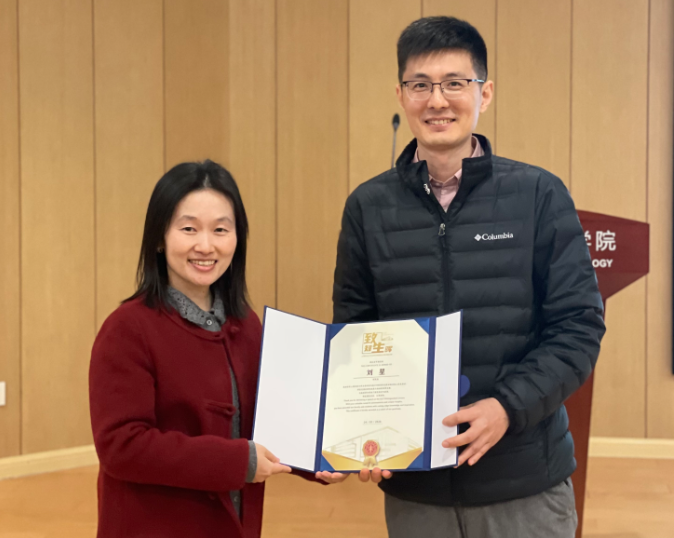
Xing Liu is a professor, principal investigator, and doctoral supervisor at the Shanghai Institute of Materia Medica, Chinese Academy of Sciences, and a recipient of the National Science Fund for Distinguished Young Scholars. He received his Ph.D. from the Institute of Biochemistry and Cell Biology, Chinese Academy of Sciences, in 2012, and later conducted postdoctoral research at Harvard Medical School under the supervision of Professor Judy Lieberman. He joined SIMM in 2018.
Dr. Liu has published more than 40 SCI-indexed papers and has been recognized among the world’s top 2% scientists and as an Elsevier Highly Cited Chinese Researcher. His recent work has appeared in journals including Nature, Science, Immunity, Nature Immunology, and PNAS.